5CC+ networkSmart CitiesUrban Digital Twin
5CC+ Meeting 2026 in Helsinki: Digital Twins in International Exchange
Throughout the world, digital twins are evolving from mere visualization tools into key building blocks for urban planning and decision-making processes. Against this backdrop, the 5CC+ network met in Helsinki from May 18 to 21, 2026. Representatives from Helsinki, Hamburg, Prague, Rotterdam, Vienna, and Singapore, as well as partners Future Insight and Virtual City Systems, gathered for the annual general meeting.
The meeting focused on exchange and cooperation among the cities regarding the development and maintenance of digital twins, as well as their use in specific applications.
Use Cases for Digital Twins in the 5CC+ Cities
During several sessions, the participating cities presented current projects and use cases.
- Hamburg demonstrated a VR application based on a game engine to present planning scenarios in a city model, explore them virtually, and develop them collaboratively.
- Helsinki presented applications for planning, infrastructure, and energy analyses based on its own city model.
- Prague and Rotterdam presented examples from infrastructure management as well as climate and energy data.
- Vienna used the “GeoTwin” approach to demonstrate the use of digital twins in planning and administration.
- Singapore presented approaches to automated data analysis, including the use of AI to derive information from geodata.
Some of these applications could be tried out directly on site, such as VR environments based on real city models.
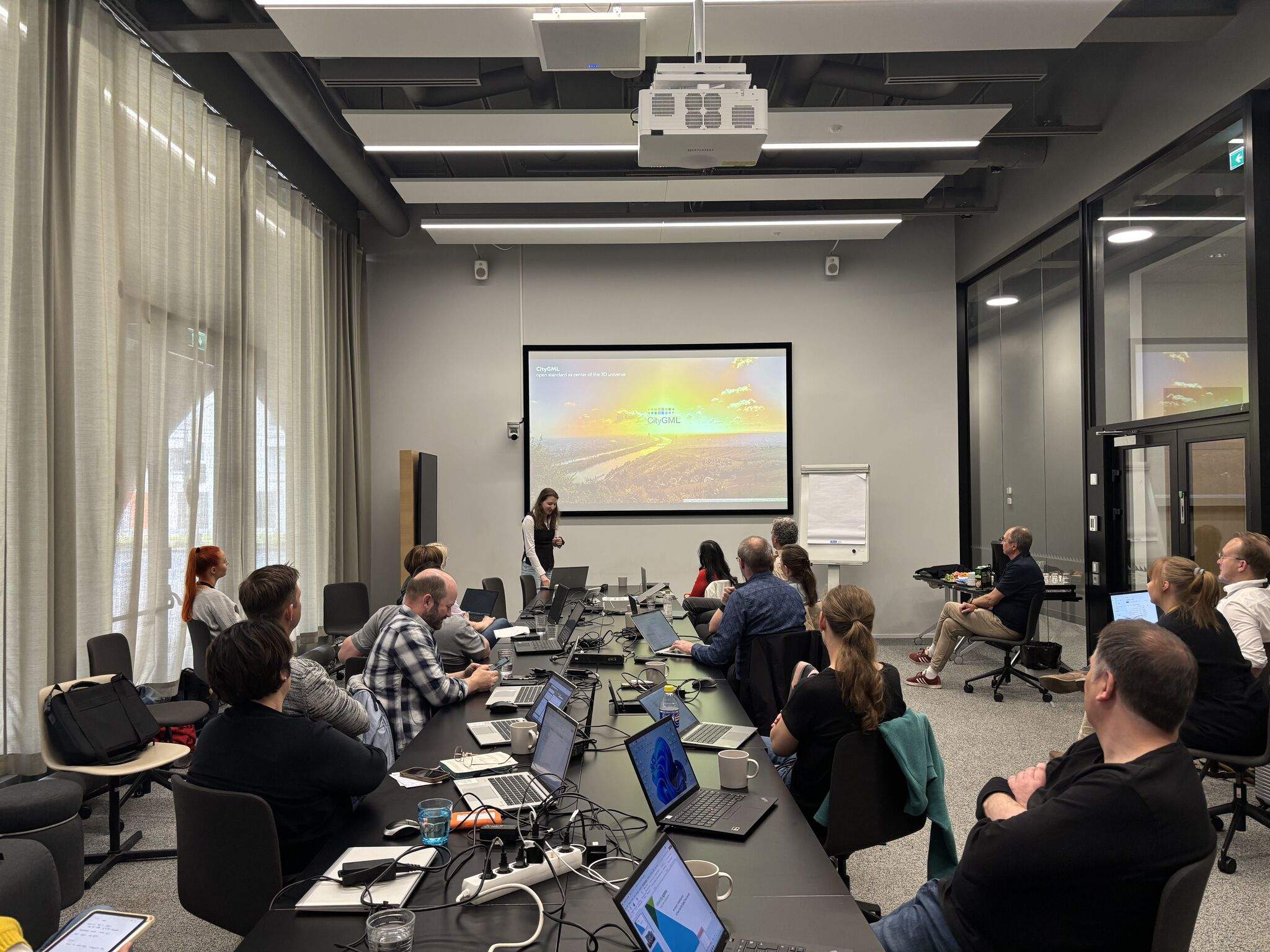
Tackling Specific Challenges Together: Workshops on Data, Applications, and Urban Issues.
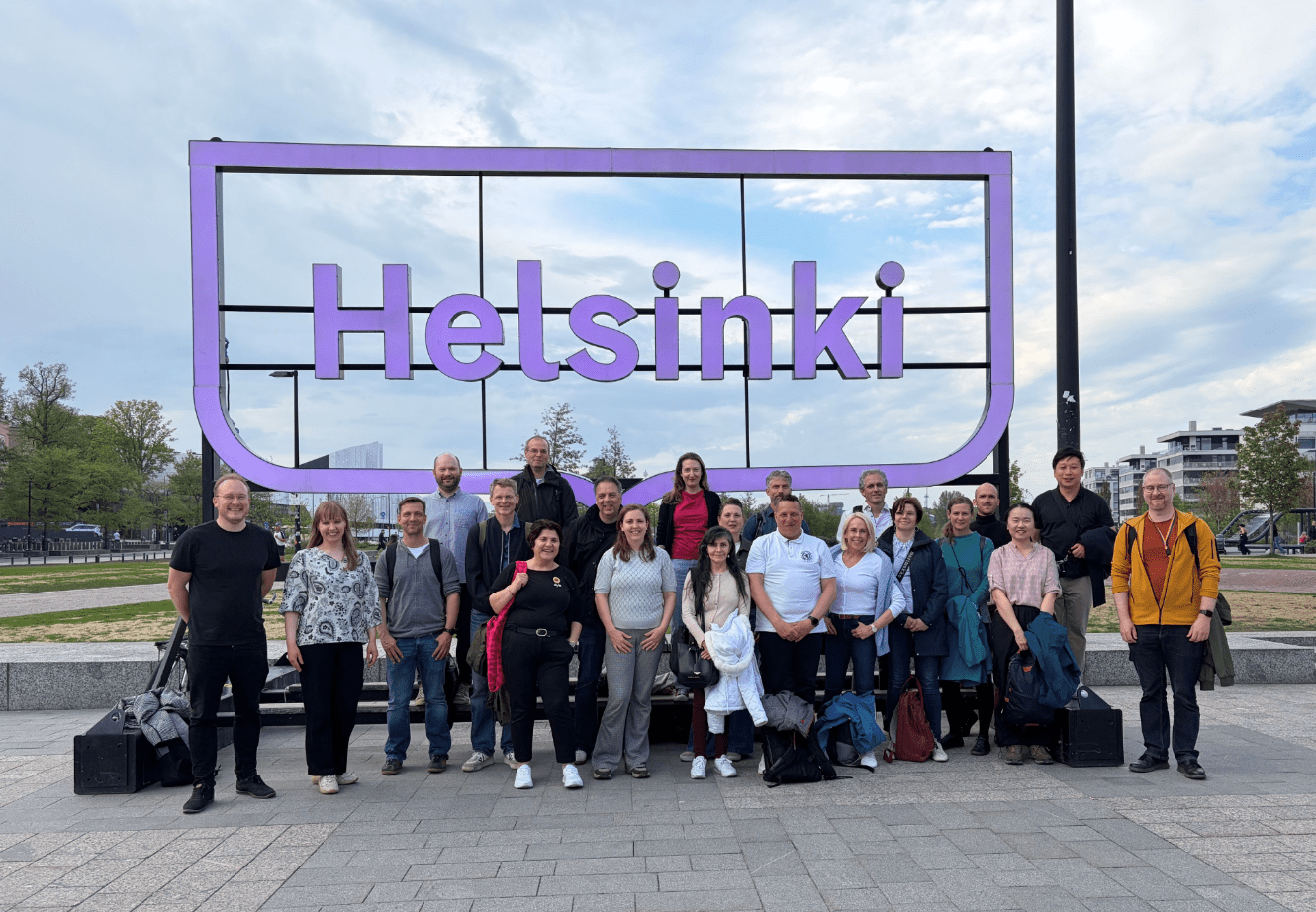
The 5CC+ meeting in Helsinki provided an opportunity to share experiences and best practices regarding digital twins.
Workshops on Data and Digital Applications
In addition to the presentations, specific issues were discussed in workshops. These included, for example:
- Use of environmental and climate data
- Use of game engines and immersive applications
- Further development of existing models and data structures
- Integration of different data sources into existing systems
A recurring theme was the consolidation of different types of geodata and their use in digital twins.
A key finding from the discussions was that digital twins are increasingly becoming part of operational processes. Topics such as data management, user and access models, and the integration of external data sources are continuing to gain importance.
In particular, the user-oriented provision of applications—for example, through simplified interfaces and guided workflows—emerged as an important prerequisite for widespread use in administration and planning.
Initial approaches to the use of AI were also discussed, such as in the automated analysis of geospatial data. Overall, however, it became clear that the current focus remains on the integration, quality, and linking of data. Against this backdrop, Virtual City Systems contributed the latest developments surrounding the VC Suite to the discussion.
Virtual City Systems in the 5CC+ Network
Virtual City Systems’ presentation focused in particular on the new VC Publisher 6, featuring a redesigned, lightweight user interface as well as expanded capabilities for integrating and processing heterogeneous geodata.
Another key focus was on linking different types of data: The VC Panorama Viewer allows 2D, 3D, and panoramic images to be combined and used together within a single application.
In addition, approaches were presented for flexibly and dynamically linking external domain-specific data with 3D city models—as the foundation for end-to-end workflows in planning and analysis.
Discussions also revealed that interoperability, open standards, and integration into existing IT landscapes play a central role for cities.
Future development and Outlook
The meeting in Helsinki also continued the dialogue of recent years.
Following Singapore (2024) and Prague (2025), the focus was once again on concrete applications and use cases, as well as on how digital twins can be integrated into existing processes.
Topics such as climate change, urban development, growing cities, and tourism highlight the increasing importance of digital twins for cities and regions.
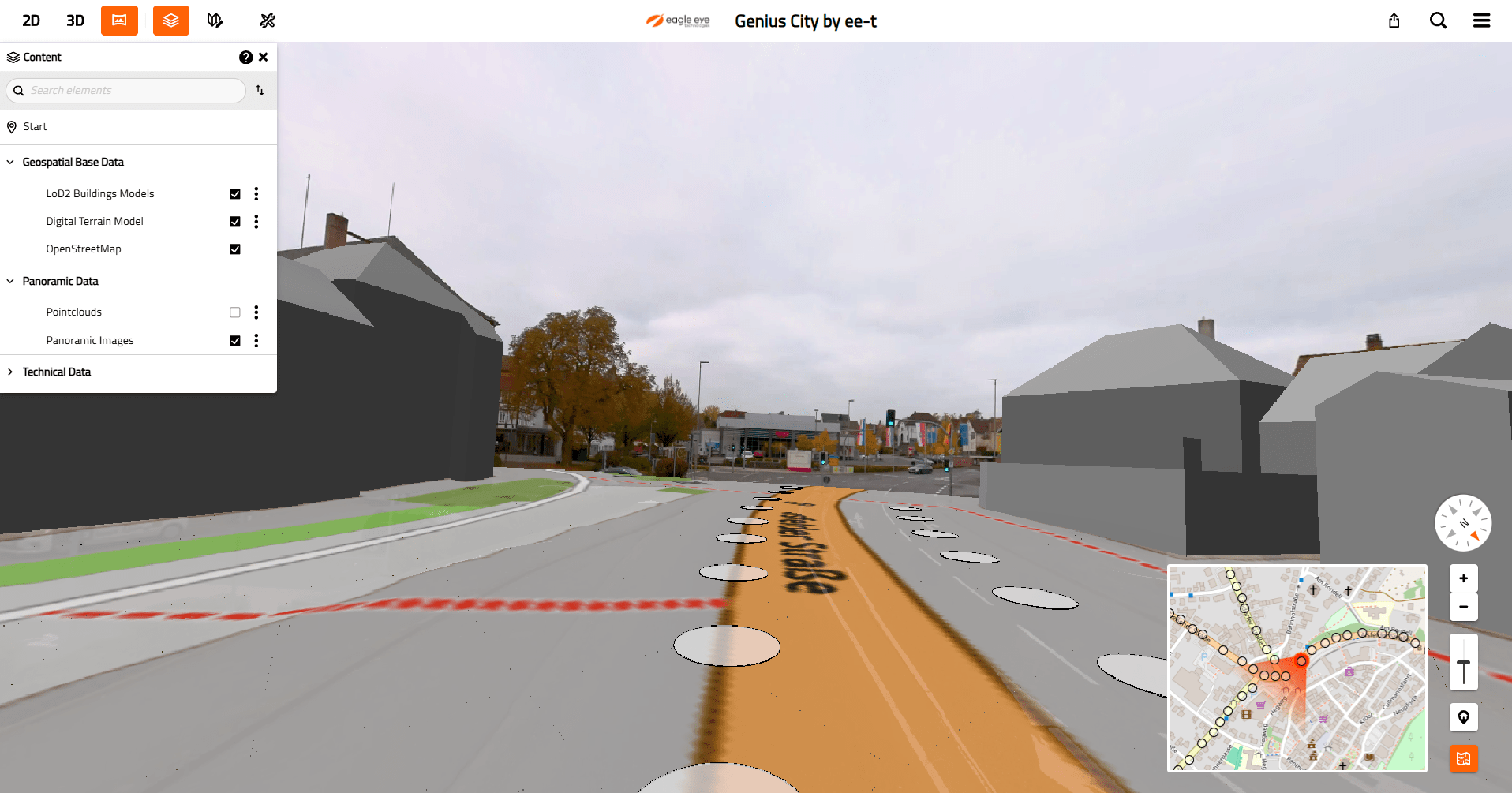
VC Panorama seamlessly integrates 360° street-level views into 2D, 3D, and oblique aerial views, enabling analysis and planning within a spatial context.
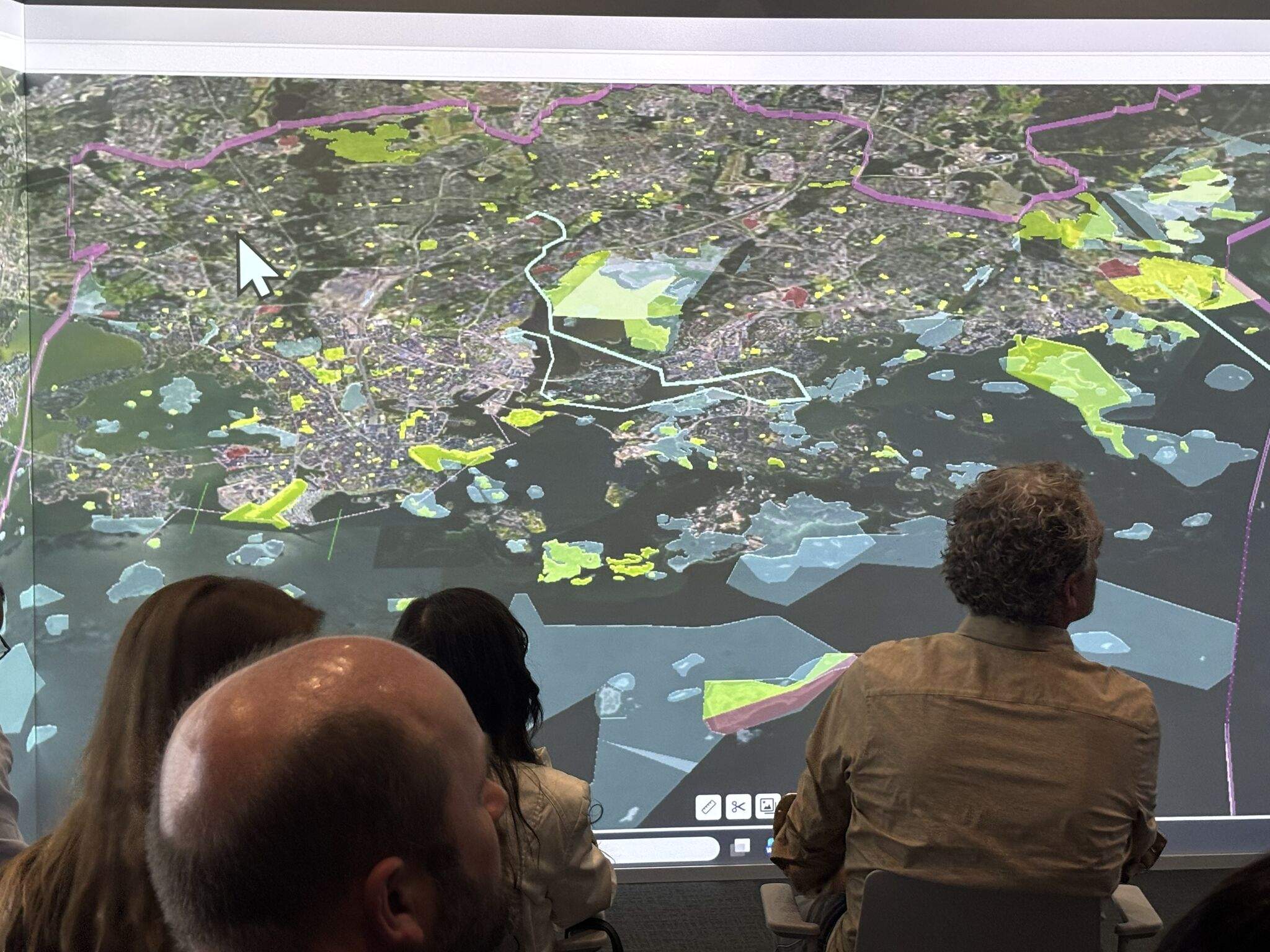
Use cases make the added value of digital twins tangible for cities and regions.
Conclusion
The 5CC+ meeting in Helsinki demonstrated how differently cities are already using digital twins today—and, at the same time, the common challenges they face. The exchange within the network makes it possible to pool experiences, compare approaches, and drive the further development of practical solutions in a targeted manner.
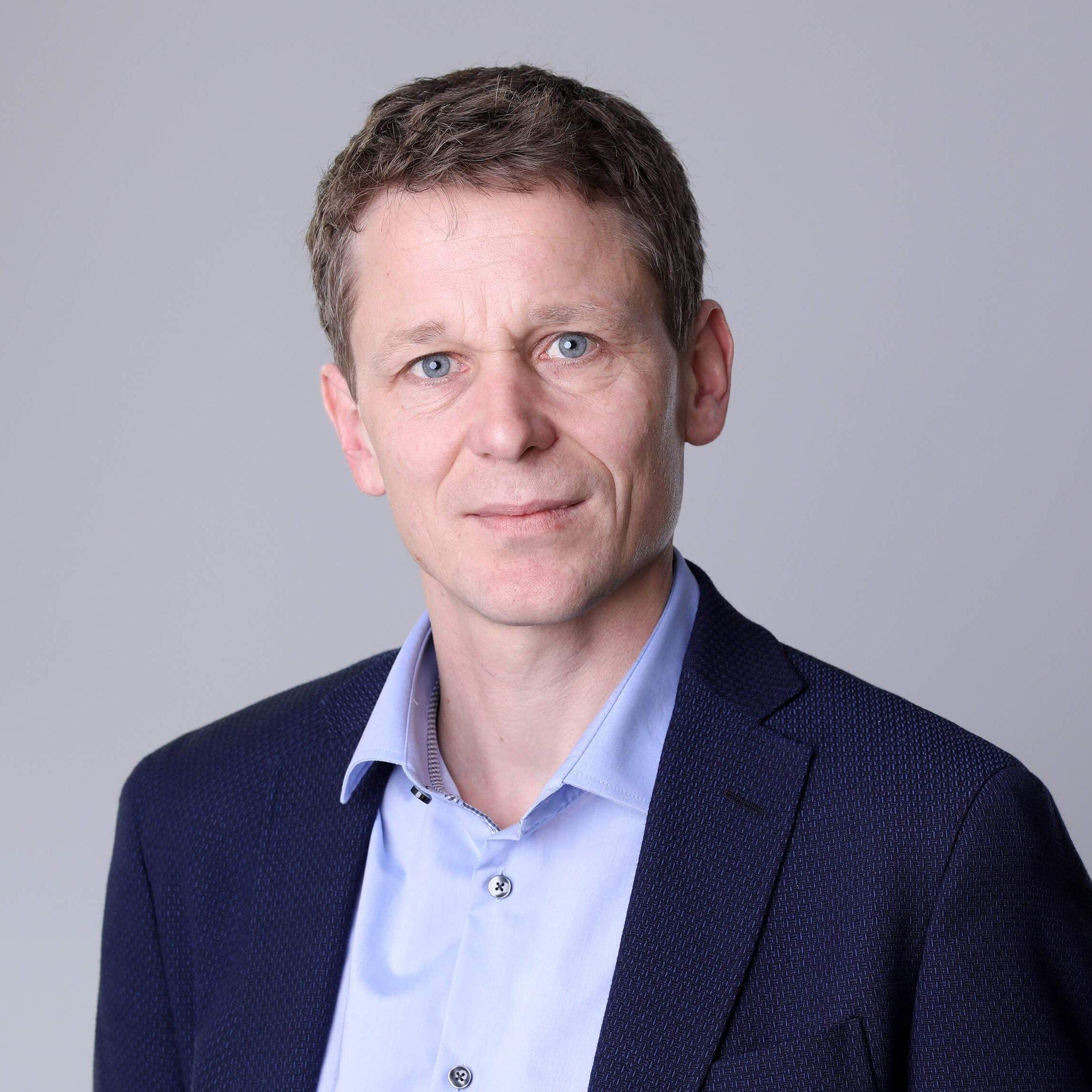
“Sharing experiences and practical knowledge has always been at the heart of 5CC+. Many cities face similar challenges and gain valuable insights from the case studies and approaches of others.”