Wiesbaden: An Urban Digital Twin for all user groups and requirements
How Wiesbaden uses a comprehensive geodata infrastructure to further develop existing systems and bring them together into a shared working environment
A project that connects: Wiesbaden‘s path to a Digital Twin
Building on newly established structures and the desire to break new ground
Wiesbaden has set itself the goal of leveraging the potential of an Urban Digital Twin for administration, planning and citizen participation. The following report shows how the city has approached this project strategically, organisationally and technically. It highlights goals, approaches, technologies used and communication strategies, and provides an outlook on the next steps.

„The Digital Twin offers us the opportunity to address many urban issues in an integrated and user-oriented way, from municipal heat planning to social and cultural offerings to transport planning.“
Wiesbaden‘s path to the Digital Twin
Wiesbaden already had an extensive geodata base before the project began: a 3D building model had been available since 2006 and has been hosted by Virtual City Systems (VCS) since 2015. In addition to the 3D model, a geodata infrastructure containing extensive 2D and 3D data has been successfully established over the past decades. Wiesbaden was already using a 2D geoportal for the web-based visualisation of spatial information. However, with new requirements, particularly those arising from the newly established Smart City unit, the topic of Urban Digital Twins came into sharper focus – as an opportunity to further develop and better integrate existing structures.
An important basis for getting started was the promotion of smart municipalities and regions in the ‘Starke Heimat Hessen’ (Strong Home Hesse) programme of the Hessian Ministry of Digitalisation and Innovation. This enabled the first technical and organisational steps to be implemented.
One twin for all: planning, climate, public
What Wiesbaden wants to achieve with the Digital Twin
Wiesbaden‘s Digital Twin is aimed at different target groups: administration, politics, experts and citizens. The aim is to provide data-based support for complex urban development processes, use resources more efficiently and, at the same time, involve the urban community. The twin covers topics such as mobility, climate, environment, social issues and culture.
One concrete example is the integrated construction site overview. It provides transparent insight into ongoing and planned works across the city and supports both internal coordination and public communication.
„From core functions such as 3D visualisation to the networked use of open data, the VC Suite enables the state capital to seamlessly link data, processes and transparency. The modular architecture ensures that the Digital Twin remains flexible, scalable and future-proof – exactly what a modern city administration needs.“
Instead of isolated solutions: leveraging continuity, ensuring modularity
Wiesbaden uses various components of the VC Suite for implementation
A key principle was connectivity to existing structures. The city of Wiesbaden was already using solutions from the VCS portfolio, including hosting of the 3D building model. Building on this foundation, various components of the VC Suite are now in use:
- VC Publisher for data preparation and provision
- VC Map as a public and internal visualisation front end
- VC Database for consistent storage of semantic city model data
- VC Warehouse for 3D data conversion into common industry formats
- VC Story for interactive content preparation
The public platform is operated on external infrastructure, while sensitive data remains within the city‘s IT system.
Communication instead of complexity
How Wiesbaden explains and develops the Digital Twin
A Digital Twin only reveals its full potential when it is actively communicated and explained. The city of Wiesbaden relies on a wide range of communication formats – from press releases and screencasts to workshops with schools and universities. Feedback from these formats is collected and used for further development.
What really counts: cooperation on equal terms
Success factors beyond technology
A key aspect of the project‘s success in Wiesbaden to date has been the cooperation between the Smart City department and the Geoinformation department. This was made possible by a shared understanding of goals, openness to cross-departmental cooperation and a willingness to further develop existing administrative structures.
„Our goal was to operate as few systems as possible. With the VC Suite, we were able to consolidate central components and at the same time create a modern platform for administration and citizens.“
Looking ahead: heating, transport, open data
The next steps in the development of the twin
The Digital Twin is being further developed in close coordination with the specialist departments of the city administration, municipal companies and external partners. The focus is on the following three areas:
- Municipal heating planning
- Mobility and traffic flow
- Integration of external open data via the Dynamic Layers plugin (data catalogues from the EU, the federal government, the state, etc.)
Another tool expected to play a central role in Wiesbaden is VC Story: it can significantly simplify the editorial preparation of topics for specific target groups or with a specialised focus, making them easy to understand and interact with.
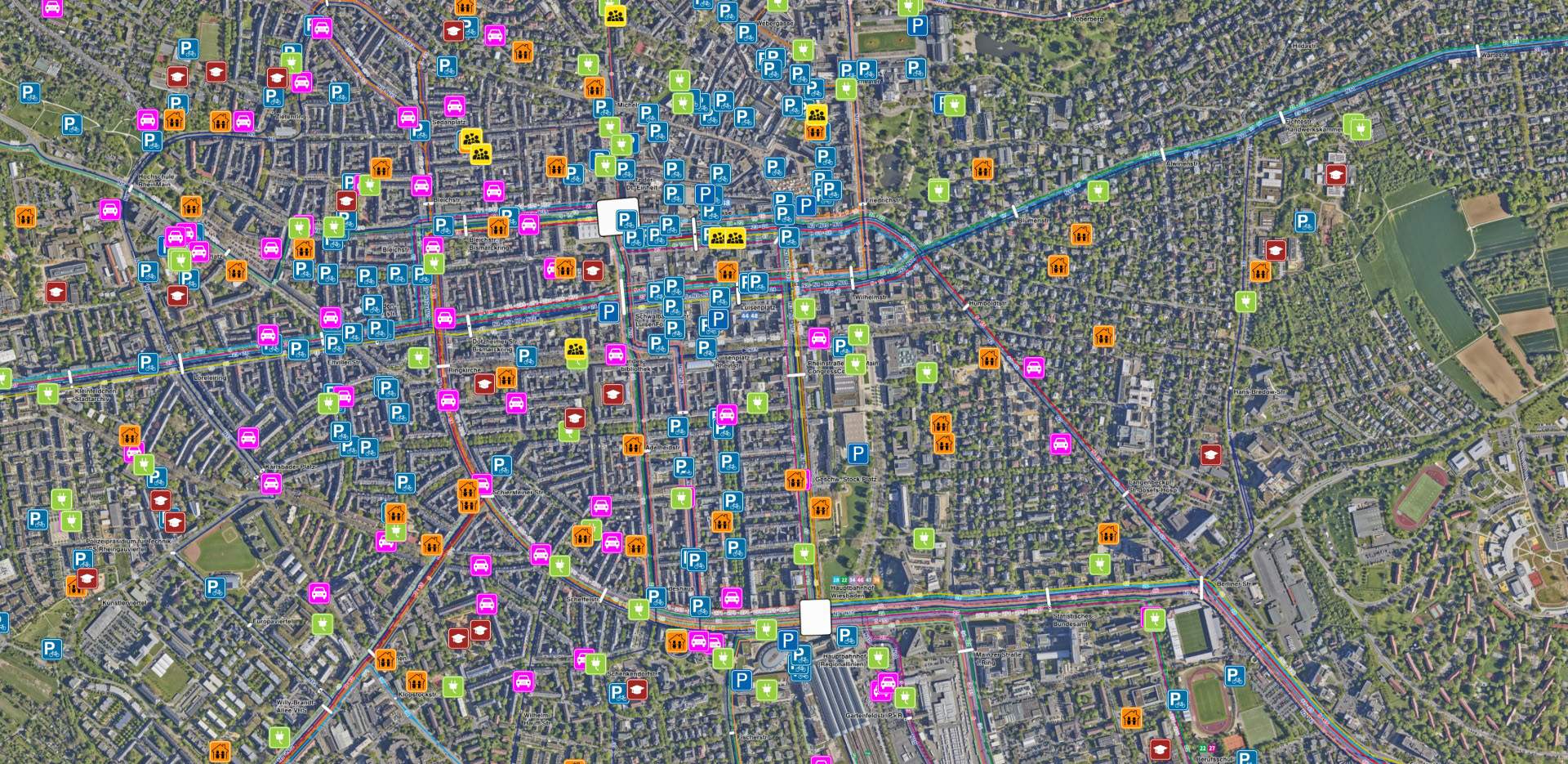
Figure: Analysis of cross-thematic urban data and information in the Wiesbaden Digital Twin | Copyright: State Capital of Wiesbaden
„Wiesbaden shows how partnership-based collaboration can produce solutions that also benefit other municipalities – through open architecture, reusability and joint forward thinking.“

Conclusion: Digitalisation that connects
With its Urban Digital Twin, Wiesbaden combines technical development with organisational cooperation and public communication. The project shows how digitalisation in a municipal context can build on existing structures while also creating new momentum for innovation.
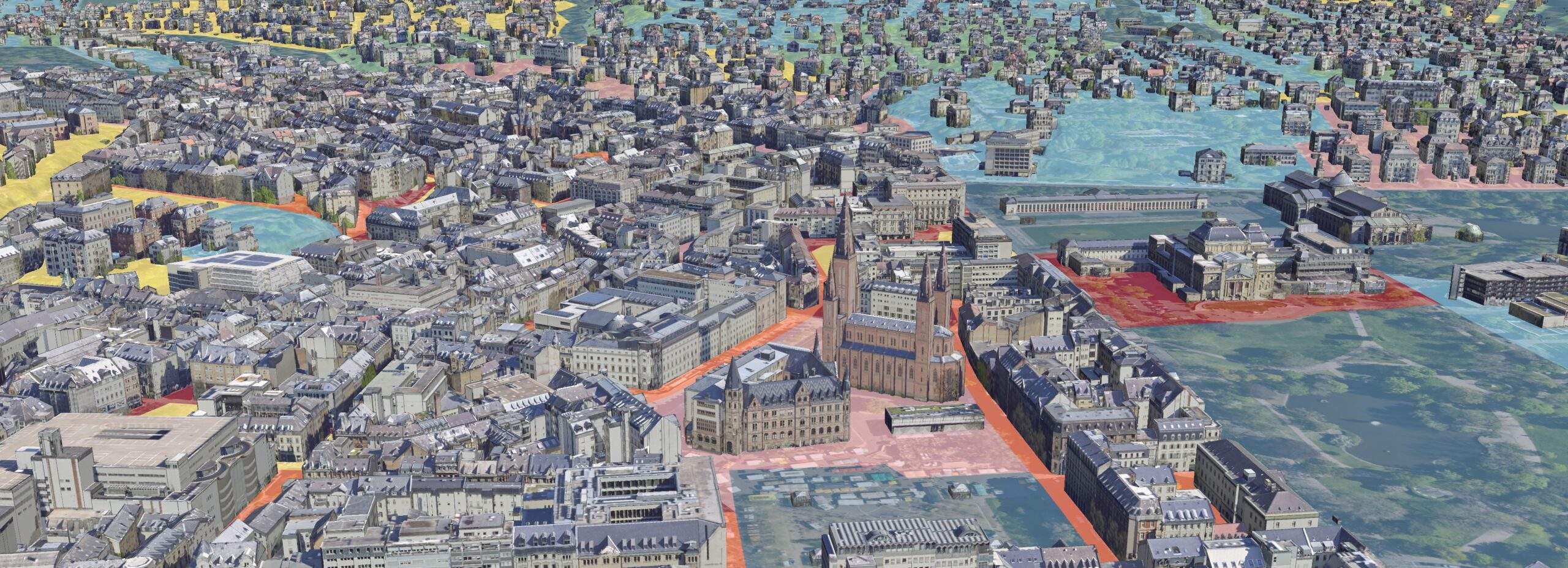
Figure: Visualisation of Wiesbaden‘s heat demand (grouped) in the Digital Twin | Copyright: State Capital of Wiesbaden

„Suggestions, feedback and personal ideas can be contributed directly and incorporated into the further process. The internal development team is confident that the diversity of perspectives from the urban community will help to make the Digital Twin practical and needs-oriented – as a tool for sustainable, transparent and future-oriented urban development in Wiesbaden.“
VC Suite components for collaboration on an equal footing
Would you like to unlock the potential of an Urban Digital Twin? We would be happy to show you how you can strategically, organizationally, and technically realize this project — with one twin for everything: planning, climate, and public relations.

„Wiesbaden shows how partnership-based collaboration can produce solutions that also benefit other municipalities – through open architecture, reusability and joint forward thinking.“